

Germany Polyolefin Market Leads Europe’s Sustainable Growth with BASF, LyondellBasell
Polyolefin Market
Germany emerges as the epicenter of sustainable polyolefin innovation, driven by advanced recycling infrastructure, regulatory mandates
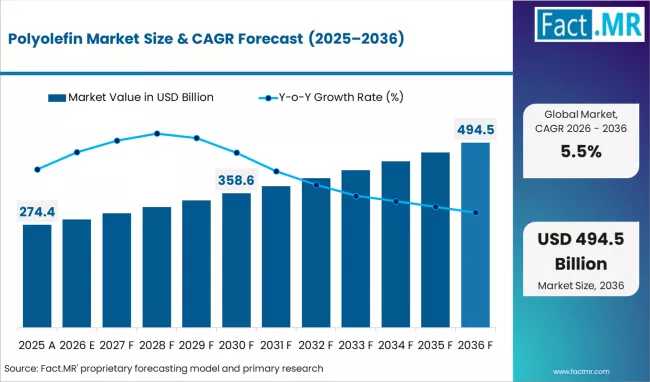
ROCKVILLE, MD, UNITED STATES, April 10, 2026 /EINPresswire.com/ -- According to Fact.MR’s latest analysis, the global polyolefin market is valued at USD 289.49 billion in 2026 and is projected to reach USD 494.49 billion by 2036, expanding at a CAGR of 5.50%. Within this landscape, Germany stands out as a critical European growth hub, supported by strong industrial infrastructure and sustainability-driven demand.Germany’s polyolefin market growth is anchored in advanced recycling systems, automotive lightweighting initiatives, and regulatory pressure to adopt circular material solutions. The country continues to transition from conventional polymer consumption toward high-performance, recyclable, and mono-material polyolefin applications.
Get detailed market forecasts, competitive benchmarking, and pricing trends: https://www.factmr.com/connectus/sample?flag=S&rep_id=12056
Quick Stats – Germany Focus
Germany CAGR (2026–2036): 5.5%
Europe Market Share (Germany): ~26% (largest in Europe)
Global Market Size (2026): USD 289.49 Billion
Forecast Value (2036): USD 494.49 Billion
Incremental Opportunity: USD 205 Billion
Leading Product: Polyethylene (37.7% share)
Leading Application: Film & Sheet (25.5% share)
Key Players: BASF SE, LyondellBasell Industries, TotalEnergies SE, Exxon Mobil Corporation, INEOS Group
Executive Insight for Decision Makers
Germany’s polyolefin market reflects a strategic shift from volume-driven production to sustainability-led value creation.
Manufacturers must invest in recycled polyolefin integration and advanced sorting technologies.
Automotive OEMs are increasingly specifying recyclable thermoplastics for lightweight components.
Investors should prioritize companies with strong circular economy capabilities and certification portfolios.
Risk: Companies failing to align with EU sustainability regulations risk supply chain exclusion and declining market relevance.
Market Dynamics
Key Growth Drivers
Strong regulatory push for recyclable and mono-material packaging
Automotive sector demand for lightweight and high-performance polymers
Expansion of mechanical and chemical recycling infrastructure
Rising demand for sustainable packaging across FMCG and retail
Key Restraints
Stringent environmental regulations on single-use plastics
High cost of recycling infrastructure and compliance
Feedstock price volatility (ethylene and propylene)
Emerging Trends
Rapid adoption of post-consumer recycled (PCR) polyolefins
Growth in chemical recycling technologies (pyrolysis, depolymerization)
Shift toward mono-material packaging for easier recyclability
Increased collaboration between chemical producers and waste management firms
Segment Analysis
Leading Segment:
Polyethylene dominates with ~37.7% share, widely used in packaging films, pipes, and containers due to cost-efficiency and versatility.
Fastest-Growing Segment:
Thermoplastic polyolefins (TPO) driven by automotive and construction applications.
Application Breakdown:
Film & Sheet (25.5%) – dominant in packaging
Injection Molding – automotive and appliances
Blow Molding – containers and industrial packaging
Strategic Importance:
Germany’s packaging converters and automotive manufacturers are driving demand for high-performance and recyclable grades, reinforcing segment growth.
Supply Chain Analysis (Who Supplies Whom)
Raw Material Suppliers:
Petrochemical companies supplying ethylene and propylene feedstocks
Manufacturers / Producers:
Polymer producers (e.g., BASF, INEOS) convert feedstocks into polyethylene and polypropylene resins
Distributors:
Specialized polymer distributors and chemical traders supply resins to converters
End-Users:
Packaging companies (flexible films, rigid containers)
Automotive manufacturers (interior/exterior components)
Construction firms (pipes, insulation materials)
Flow Insight:
Feedstock suppliers → Polymer producers → Distributors → Converters → OEMs/Brand owners
Germany’s integrated chemical clusters ensure efficient supply chain coordination and reliability.
Pricing Trends
Polyolefins operate as commodity polymers, but pricing varies by grade and application
Key Influencers:
Crude oil and natural gas prices
Feedstock (ethylene/propylene) costs
Recycling and compliance costs
Demand from packaging and automotive sectors
Premium Pricing:
Recycled and specialty-grade polyolefins command higher margins due to sustainability certifications
Margin Insight:
Ethane-based producers maintain cost advantage, while European players compete via innovation and sustainability
Regional Analysis – Germany Focus
Germany leads Europe’s polyolefin market due to:
Advanced recycling infrastructure and circular economy leadership
Strong automotive manufacturing base
High adoption of sustainable packaging solutions
Government-backed environmental regulations
Top Countries Growth Comparison
Germany – 5.5% CAGR
France – steady growth driven by packaging modernization
Italy – specialty polymer applications
UK – sustainability-driven demand
Spain – expanding packaging sector
Developed vs Emerging:
Germany leads in technology and sustainability, while Eastern Europe offers cost-driven expansion opportunities.
Competitive Landscape
Market Structure: Moderately consolidated
Key Players:
BASF SE, LyondellBasell Industries, TotalEnergies SE, Exxon Mobil Corporation, INEOS Group, SABIC
Competitive Strategies
Investment in recycling technologies
Expansion of sustainable product portfolios
Strategic partnerships with OEMs and recyclers
Focus on high-performance and specialty grades
Strategic Takeaways
For Manufacturers
Invest in recycled content and circular solutions
Strengthen partnerships with waste management firms
For Investors
Focus on companies with sustainability-driven innovation
Target firms with strong European regulatory alignment
For Marketers / Distributors
Highlight sustainability certifications and performance benefits
Build strong distribution networks across Germany’s industrial hubs
Future Outlook
Germany’s polyolefin market will increasingly be shaped by:
Circular economy mandates
Chemical recycling advancements
Automotive electrification and lightweighting
Sustainable packaging innovation
Long-term growth will favor high-performance, recyclable, and low-carbon polyolefin solutions.
Full Report: Unlock 360° insights for strategic decision making and investment planning- https://www.factmr.com/checkout/12056
To View Related Report
Polyolefin Compound Market https://www.factmr.com/report/1394/polyolefin-compound-market
Polyolefin Wax Market https://www.factmr.com/report/3700/polyolefin-wax-market
Recycled Polyolefin Market https://www.factmr.com/report/recycled-polyolefin-market
Recycled Polyolefin Compounds for Food Packaging Market https://www.factmr.com/report/recycled-polyolefin-compounds-for-food-packaging-market
S. N. Jha
Fact.MR
+ +1 628-251-1583
email us here
Legal Disclaimer:
EIN Presswire provides this news content "as is" without warranty of any kind. We do not accept any responsibility or liability for the accuracy, content, images, videos, licenses, completeness, legality, or reliability of the information contained in this article. If you have any complaints or copyright issues related to this article, kindly contact the author above.
