

Lloyd’s Register assesses AI navigation technology in live vessel trial with Orca AI
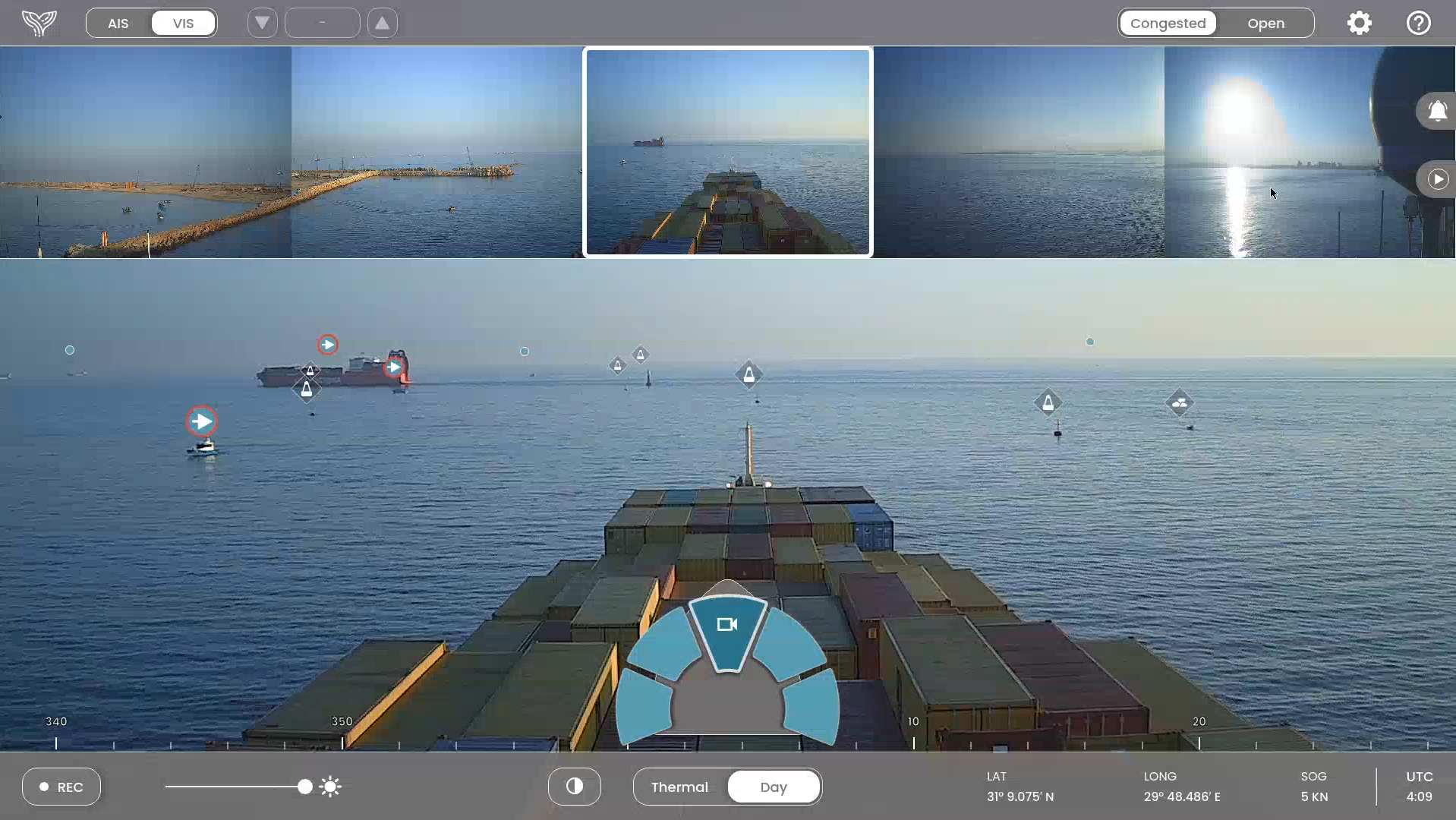
Image from Orca bridge screen - Adriana panoramic left the port
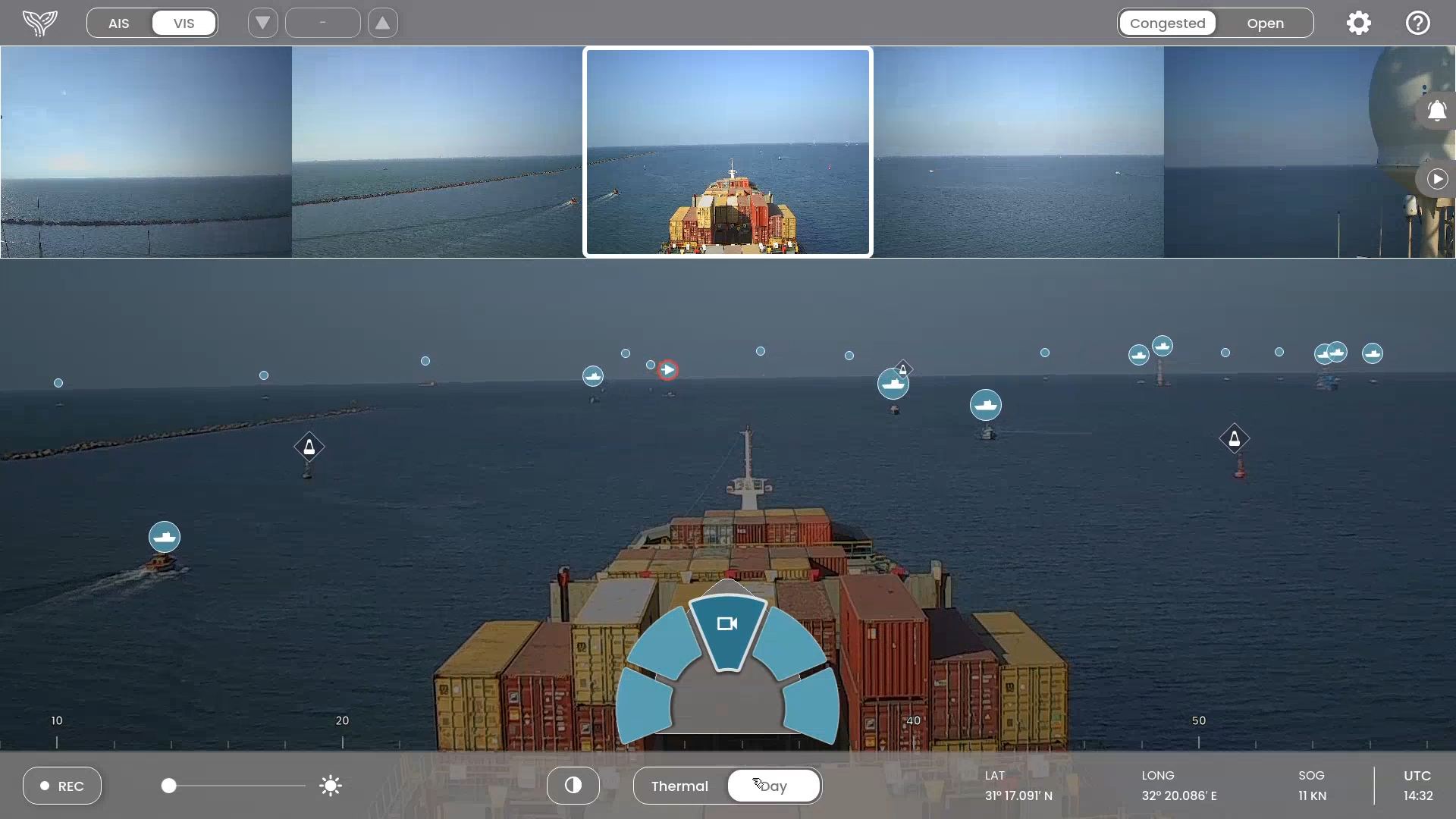
Image from Orca bridge screen - Adriana vis many detections of risk collisions
The trial assessed the performance of an AI-based navigation platform and its role in enhancing situational awareness & supporting human decision-making at sea.
The assessment focused on how AI-based computer vision can support human decision-making in real operating conditions, particularly in complex navigation scenarios such as congested waters and reduced visibility.
The trial was conducted on a feeder containership during a five-day voyage through some of the Mediterranean’s busiest shipping lanes, from the port of Gioia Tauro in Italy to Marsaxlokk, Malta. The work tested the system’s object detection performance alongside radar, AIS and visual watchkeeping.
During the voyage, the platform detected close-range and low-signature targets that were not always visible on traditional systems, supporting watchkeepers in challenging scenarios such as non-AIS vessel and small craft encounters and night operations.
LR Ship Performance Specialist Han Beng Koe joined the vessel as the onboard assessor, providing real-time feedback on usability and performance while the system was evaluated against established navigation references.
Koe said: “As the onboard assessor, I observed the demonstrated capabilities of AI-based computer vision within the operational environment. This provides a clear indication of the performance potential and scalable application of emerging technologies in maritime navigation systems.”
Dipali Kuchekar, Product Manager (Marine and Offshore) at LR, said: “This significant project serves as an important reference point for data-driven system evaluations. It reflects our shared commitment to the adoption of novel technologies, at a time when decarbonisation and autonomy are becoming increasingly intertwined.”
Dor Raviv, Orca AI CTO and Co-founder, added: “What this trial shows is that AI-assisted navigation is no longer a future concept, it is already delivering measurable value in live operations. More than 1,200 vessels using Orca AI are evidence that earlier and more accurate detection, lead to more-informed decisions on the bridge, which lead to safer navigation. Trials like this pave the way for broader AI adoption in our industry on the journey towards autonomous shipping.”
The project combined performance metrics with structured human factors input to evaluate both detection accuracy and usability on the bridge. It also introduces a structured approach for evaluating enhanced situational awareness systems, using precision and recall metrics alongside crew feedback to reflect real-world usability. This framework aims to support shipowners, technology developers and regulators as AI becomes increasingly adopted in maritime operations.
The collaboration also included targeted human factors workshops delivered by LR to support Orca AI’s approach to gathering and using crew feedback. The sessions, overseen by Stephanie McLay, Team Lead - Human Factors, LR, focused on best practice in usability research, helping ensure that insights from seafarers operating in demanding conditions are captured, analysed and acted upon effectively.
“From a human factors perspective, it is not just about what the technology can do. It is about how effectively it supports the human operator. These workshops demonstrated how structured feedback and user-centred design can play a critical role in shaping safer and more usable AI-enabled navigation systems,” McLay said.
Trial information:
The evaluation of the Orca AI platform was conducted on a feeder containership sailing from the port of Gioia Tauro in Italy to Marsaxlokk, Malta, by way of Bar in Montenegro. Covering a total distance of 828 nautical miles, it included complex navigation scenarios such as congested waters near ports, the Strait of Messina and the Marsaxlokk anchorage, as well as open-water sailing.
Orca AI’s SeaPod computer-vision units, mounted on top of the vessel’s bridge, features a fixed sensor heads equipped with day and thermal cameras providing up to 360 FOV. The SeaPod serves as digital watchkeeper that detects, classifies and estimates the distance to relevant objects in real time, with the system display positioned centrally in the bridge console.
A total of 98 observations were collected at intervals of roughly 30 minutes in open water, reducing to 5 minutes in heavy-traffic areas. The majority (63%) were conducted under congested conditions. The dataset covered 739 relevant targets including small, unlit or low-Radar-signature vessels that traditional Radar failed to identify. Benchmarking for evaluating detections was provided by ground truth data generated through a combination of the Orca AI system’s screen and recordings, Radar, AIS data via ECDIS and visual observations.
The SeaPod achieved 94% Precision (635 “True Positive” detections out of the 739 targets) and 98.6% Recall, detecting nearly all relevant objects. There was zero system downtime during the voyage.
Glenn Harris
Lloyd's Register
+ +44 7809 757779
email us here
Visit us on social media:
LinkedIn
Instagram
Facebook
YouTube
X
Legal Disclaimer:
EIN Presswire provides this news content "as is" without warranty of any kind. We do not accept any responsibility or liability for the accuracy, content, images, videos, licenses, completeness, legality, or reliability of the information contained in this article. If you have any complaints or copyright issues related to this article, kindly contact the author above.
